


AGIBOT Dynamics
Proven in Practice, Case After Case: AGIBOT System Advances Clinical and Teaching Applications at Qilu Hospital
Recently, Qilu Hospital of Shandong University activated the AGIBOT Endoscopic Surgical System (hereinafter "the AGIBOT System"), independently developed by Agibot Medtech (Suzhou) Co., Ltd., and completed three robot-assisted procedures in succession: two robot-assisted spleen-preserving distal pancreatectomies and one robot-assisted partial hepatectomy. The consecutive performance of different procedures reflects how well the AGIBOT System fits the routine surgical organization and team collaboration of the Department of General Surgery at a large Grade-A tertiary hospital.
The first teaching demonstration surgery was performed by Professor Sanyuan Hu, a renowned minimally invasive surgery expert in China and academic leader of General Surgery at Qilu Hospital, with Professor Hanxiang Zhan as first assistant, completing a robot-assisted spleen-preserving distal pancreatectomy (Kimura procedure). The Qilu Hospital team then used the AGIBOT System again for a spleen-preserving distal pancreatectomy and a partial hepatectomy. From a complex pancreatic procedure requiring meticulous vascular dissection and preservation to common general-surgery operations such as partial hepatectomy, the AGIBOT System was put into continuous use and integrated into the clinical and teaching workflows of Qilu Hospital.
The pancreatic body and tail sit in close proximity to the splenic artery and vein: the splenic vein generally runs along the posterior aspect of the pancreas, while the splenic artery often follows a tortuous course along its superior border. In a spleen-preserving distal pancreatectomy, the lesion must be completely resected while the splenic vessels are carefully dissected and protected, placing high demands on surgical-field identification, instrument control and team coordination. The patient in this case was a young woman whose preoperative imaging suggested a possible pancreatic mucinous cystadenoma. Based on her condition and preoperative assessment, the team adopted the Kimura procedure, resecting the lesion in the pancreatic body and tail while preserving the spleen and its artery and vein.
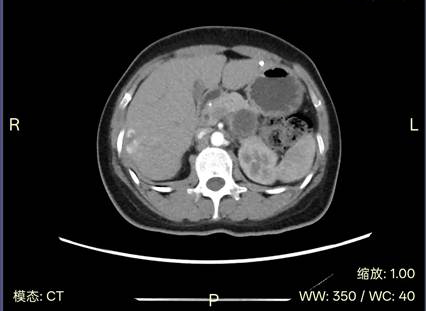
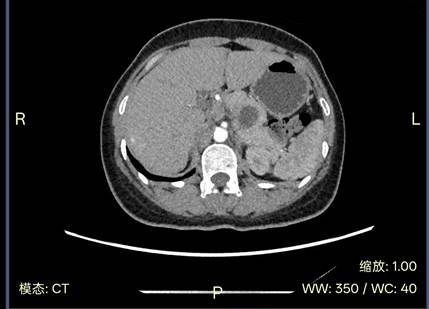
MRI images of the patient's lesion
During the operation, Professor Sanyuan Hu operated at the Surgeon Console, while Professor Hanxiang Zhan served as first assistant at the patient's side. For the dissection and protection of the splenic vessels, the AGIBOT System provided a 4K 3D ultra-HD surgical view, helping the surgeon clearly identify tissue layers, instrument positions and the anatomical relationships of the posterior pancreas and the splenic vessel region. In the narrow, deep operating space, the eight-DOF surgical arms support multi-angle operation and, together with hand tremor filtration, provide stable and controllable conditions for fine dissection and vascular protection. The multimodal picture-in-picture function presents preoperative CT images alongside the real-time intraoperative view on the same screen, allowing the surgeon to compare the preoperative plan with the intraoperative anatomy. The team completed the lesion resection as planned, and the spleen and the splenic artery and vein were all preserved.
Professor Sanyuan Hu said: "In this operation, the system's visual presentation and instrument control met the demands of fine anatomical dissection and also facilitated teaching demonstration through the actual procedures."
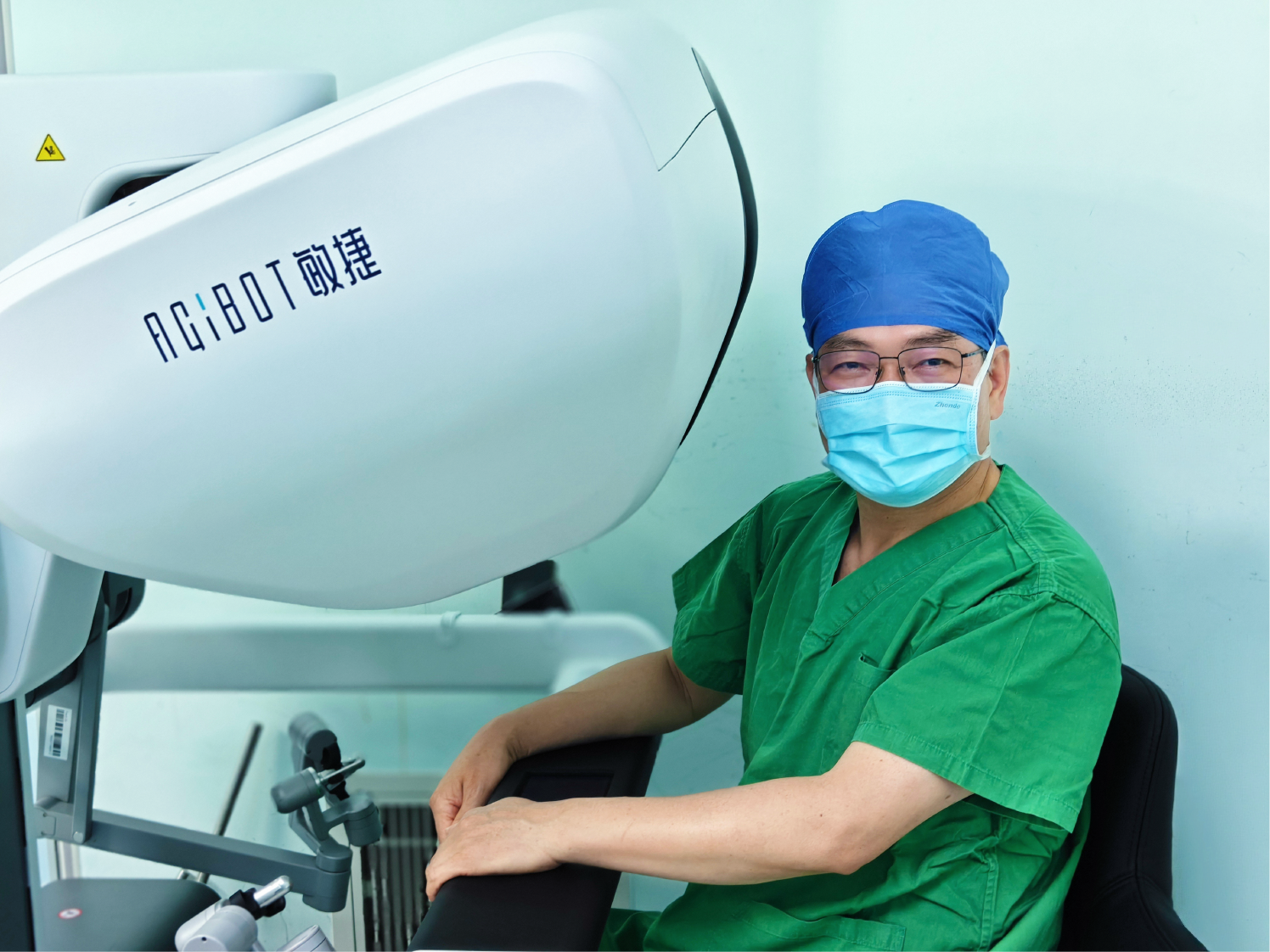
Professor Sanyuan Hu operating the AGIBOT System
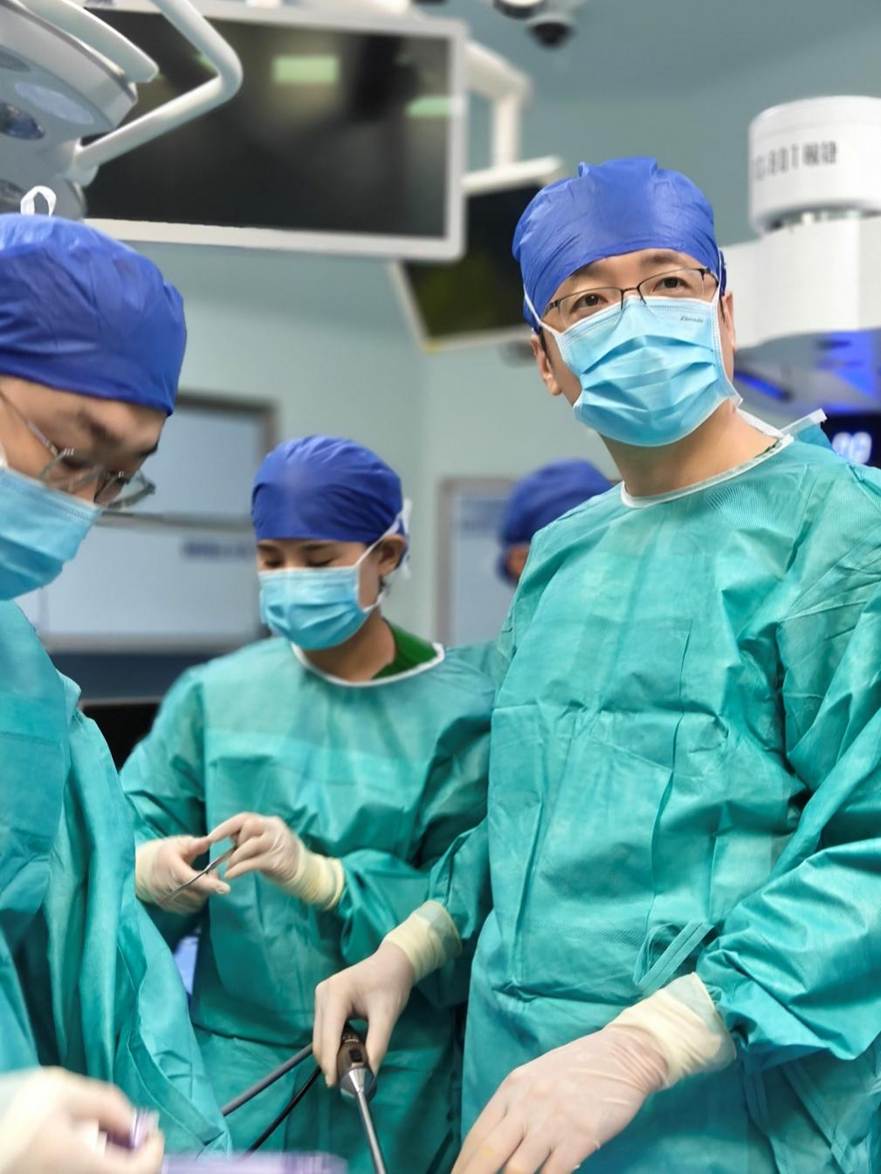
Professor Hanxiang Zhan assisting during the surgery
The surgery also served as a professional teaching demonstration case, offering visiting surgical teams a reference for the clinical practice of robotic pancreatic surgery. On-site professional exchanges focused on the management of complex anatomical regions, the collaboration between the lead surgeon and the assistant, and the application of the robotic system at specific surgical steps.
Professor Hanxiang Zhan participated throughout the surgery as first assistant at the patient's side. The lead surgeon's operation, the patient-side collaboration and the specific anatomical steps together formed the content of this teaching exchange, enabling participating teams to understand the practical application of robotics in pancreatic surgery through a complete surgical workflow.
Sustained Use, Integrated into Daily Surgical Workflows
After the teaching demonstration surgery, the Qilu Hospital team continued to use the AGIBOT System for clinical procedures, subsequently completing one more robot-assisted spleen-preserving distal pancreatectomy and one robot-assisted partial hepatectomy.
From repeating the same procedure to extending the application scenario further into liver surgery, the consecutive clinical practices demonstrate the AGIBOT System's ability to take on diverse clinical tasks, and reflect its integration into the daily surgical workflows of a large Grade-A tertiary hospital.
For a team that already has extensive robotic surgery experience, whether a surgical platform can enter routine use hinges on whether its visual presentation, instrument reach and master-slave response—and the collaboration among the lead surgeon, the assistant and the equipment—remain stable and smooth. In the consecutive surgeries, the AGIBOT System supported the team in following established clinical workflows, completing multi-level surgical tasks ranging from common liver procedures to the fine anatomical dissection required for complex pancreatic surgery.
Professor Sanyuan Hu has long worked in minimally invasive surgery and is one of the key drivers behind the development of laparoscopic and intelligent surgery in China. Professor Hanxiang Zhan is Deputy Director of Pancreatic Surgery and Director of the Clinical Skills Training Center at Qilu Hospital, and has long focused on the minimally invasive treatment of pancreatic diseases, with rich experience particularly in function-preserving pancreatic surgery. In this teaching demonstration, the two professors, acting as lead surgeon and first assistant, combined surgical operation, team collaboration and on-site teaching, presenting the observing teams with the standardized workflow and key technical points of robotic surgery.
Pancreatic Surgery at Qilu Hospital is the first specialized pancreatic unit in Shandong Province, completing 500–800 pancreatectomies each year, with laparoscopic and robot-assisted procedures accounting for more than 60%. Building on this high-level clinical and teaching platform, the AGIBOT System can serve multi-level needs spanning complex pancreatic surgery, common general-surgery procedures and surgeon training, reflecting the product's comprehensive application value within the clinical system of a large Grade-A tertiary hospital.
The AGIBOT System was approved for marketing by the NMPA in March 2025, and in November of the same year its indications were expanded to four major fields: urology, gynecology, general surgery and thoracic surgery. As of August 2026, the AGIBOT System had cumulatively completed nearly 2,000 clinical procedures across multiple Grade-A tertiary hospitals in China, forming a clinical application foundation that covers multiple specialties and routine to complex procedures. Standardized training conducted with clinical teams on equipment operation, team coordination and surgical workflows also provides strong support for the product's continued integration into routine hospital use.
The consecutive conduct of this teaching demonstration and the follow-up surgeries further consolidates the AGIBOT System's clinical application foundation at Qilu Hospital. Drawing on the hospital's rich clinical and teaching resources, the two sides will continue to advance standardized cooperation around robotic surgery applications, team collaboration and professional training.
Building on its mature product platform and application support system, AGIBOT will continue to serve real, complex and continuous clinical scenarios, supporting more hospitals and specialties in efficiently conducting robotic surgery and helping domestically developed endoscopic surgical robots better integrate into routine clinical practice.
Expert Profiles

Professor Sanyuan Hu
MD, Chief Physician, Grade-II Professor and doctoral supervisor; currently academic leader of General Surgery at Qilu Hospital of Shandong University. He has long been engaged in the clinical practice, teaching and research of minimally invasive surgery and is one of the key drivers behind the development of laparoscopic and intelligent surgery in China. He currently serves as Vice President of the Chinese College of Surgeons, Chinese Medical Doctor Association; President of the Intelligent Equipment Technology Branch, China Association of Medical Equipment; and Member of the Chinese Society of Surgery, Chinese Medical Association, and Vice Leader of its Laparoscopic and Endoscopic Surgery Group. He has led multiple national-level research projects and received honors including the Second Prize of the National Science and Technology Progress Award.

Professor Hanxiang Zhan
MD, Chief Physician, Professor and doctoral supervisor; currently Deputy Director of Pancreatic Surgery, Department of General Surgery, and Director of the Clinical Skills Training Center at Qilu Hospital of Shandong University, and a Taishan Scholar Young Expert. He has long focused on the minimally invasive treatment of pancreatic diseases, specializing in laparoscopic and minimally invasive pancreatic surgery, with rich experience particularly in function-preserving pancreatic surgery, and has pioneered multiple complex pancreatic procedures within the hospital. He has led several national-, provincial- and ministerial-level research projects and holds positions in multiple professional academic organizations and journals.
2026.09.15